From grand Oushak palace rugs to Hereke imperial silk and the richest kilim flat-weave tradition in the world — Turkey holds the oldest surviving pile rugs found outside Iran, and the most diverse flat-weave heritage on earth.
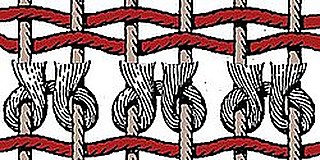
The symmetric Turkish knot — also called the Ghiordes knot after the western Anatolian town — wraps fully around both warp threads. This creates a denser, more durable pile than the Persian asymmetric knot. Both pile ends emerge between the same two warps, making the knot visible as matched pairs on the back.
Turkey produces the widest variety of weaving types of any single country: hand-knotted pile rugs, flat-woven kilims, sumakh weavings, and soumak bags. The palace luxury of Hereke silk has almost nothing in common with a Yörük nomadic kilim from the mountains — same country, completely different craft, completely different cleaning needs.
Identifying which Turkish tradition your rug comes from is the first step. Hereke silk requires completely different handling from an Oushak wool pile, and a kilim flat-weave must never be cleaned with the same pressure as a knotted rug.
A timeline of weaving innovation — craft techniques, materials, and the artisan traditions that shaped Turkish rug making.
From naturally lustrous Oushak wool to Hereke all-silk and Anatolian goat hair — fiber identification is step one of every cleaning assessment.
Turkish natural dyes produce the warm amber, terracotta, and soft blue tones that distinguish antique Anatolian rugs. The DOBAG revival brought these traditions back to living practice.
From grand palace Oushaks to nomadic kilims — each Turkish weaving tradition has distinct visual and structural characteristics that determine how it must be cleaned.
A Hereke all-silk antique, a washed contemporary Oushak, and a Yörük nomadic kilim require completely different approaches — same country, three entirely different cleaning protocols.
The symmetric Turkish knot creates a denser pile that holds more soil and can tolerate slightly more agitation than Persian asymmetric knots — but this varies enormously by construction. Kilims need zero pile agitation; Hereke silk needs minimal water; a village Oushak with natural dyes needs zone testing before any moisture is introduced.
Walk in with your rug — or a photo. We'll identify it, tell you what it needs, and give you an honest assessment. No charge for the evaluation.