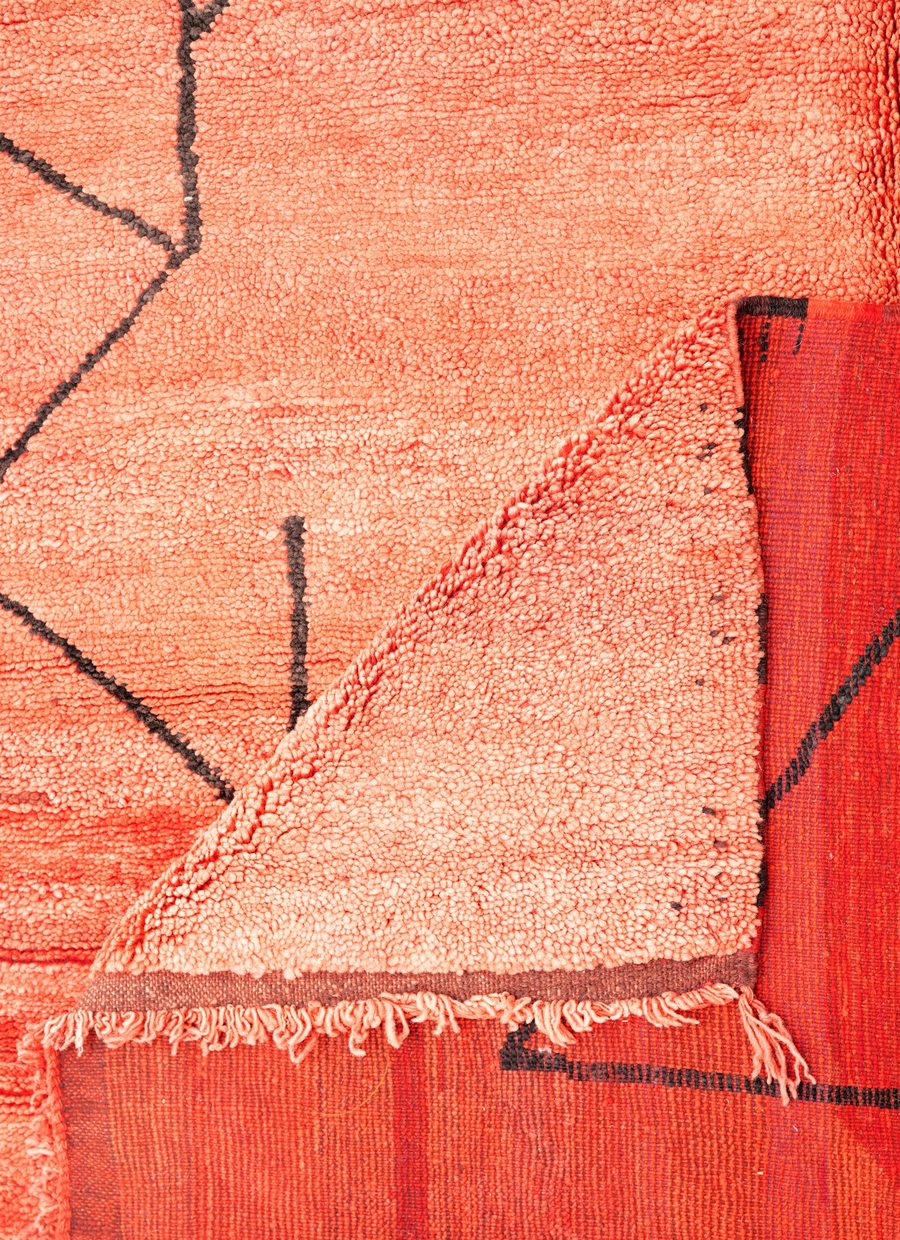
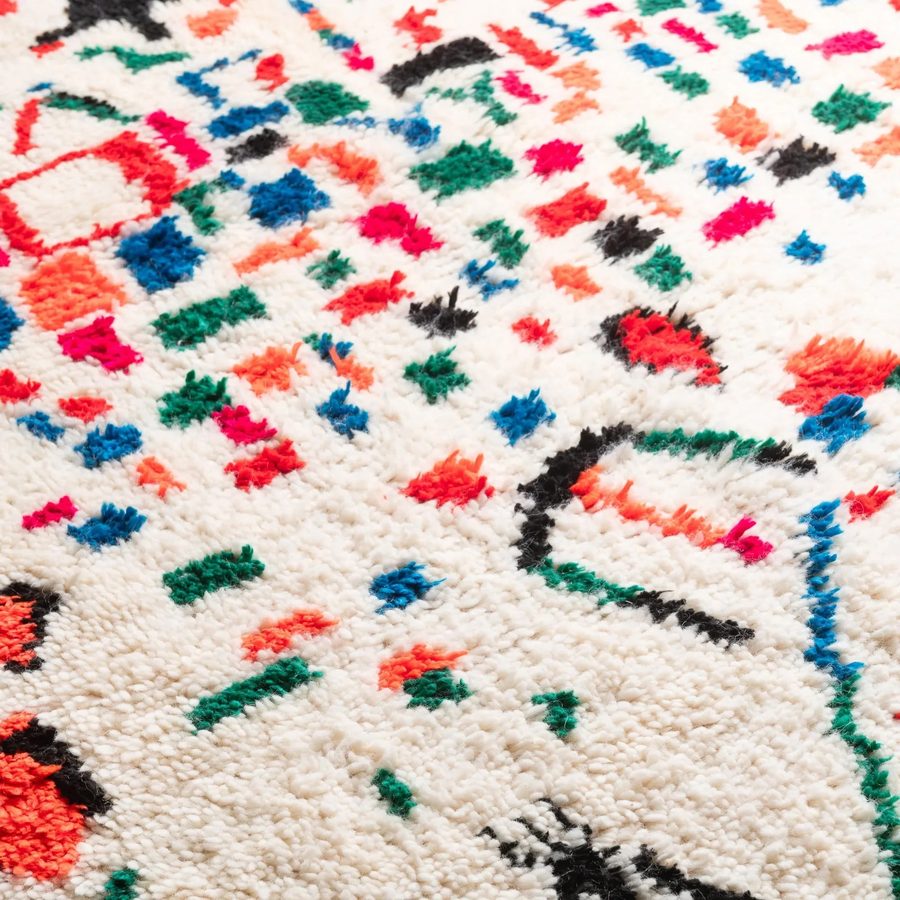
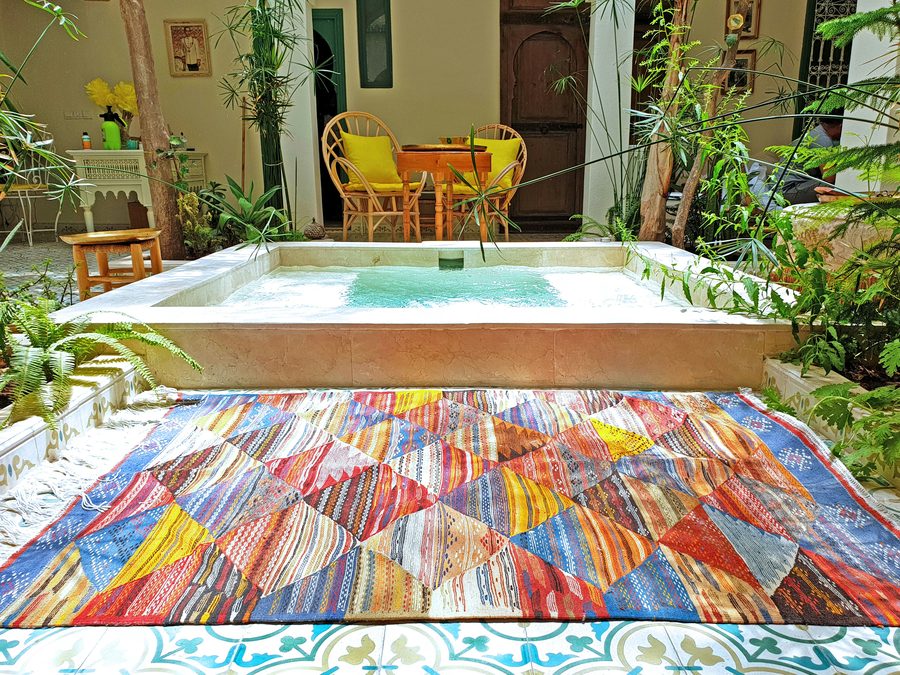
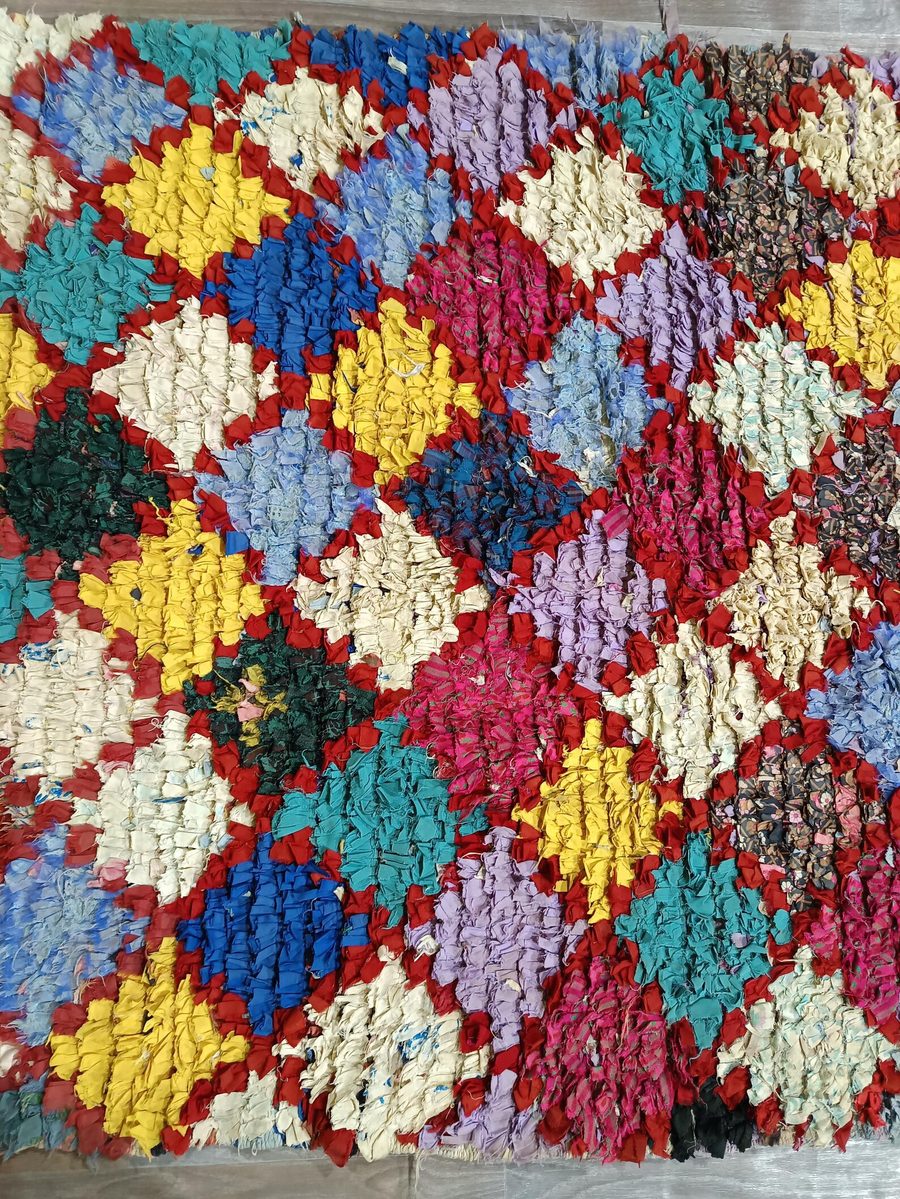
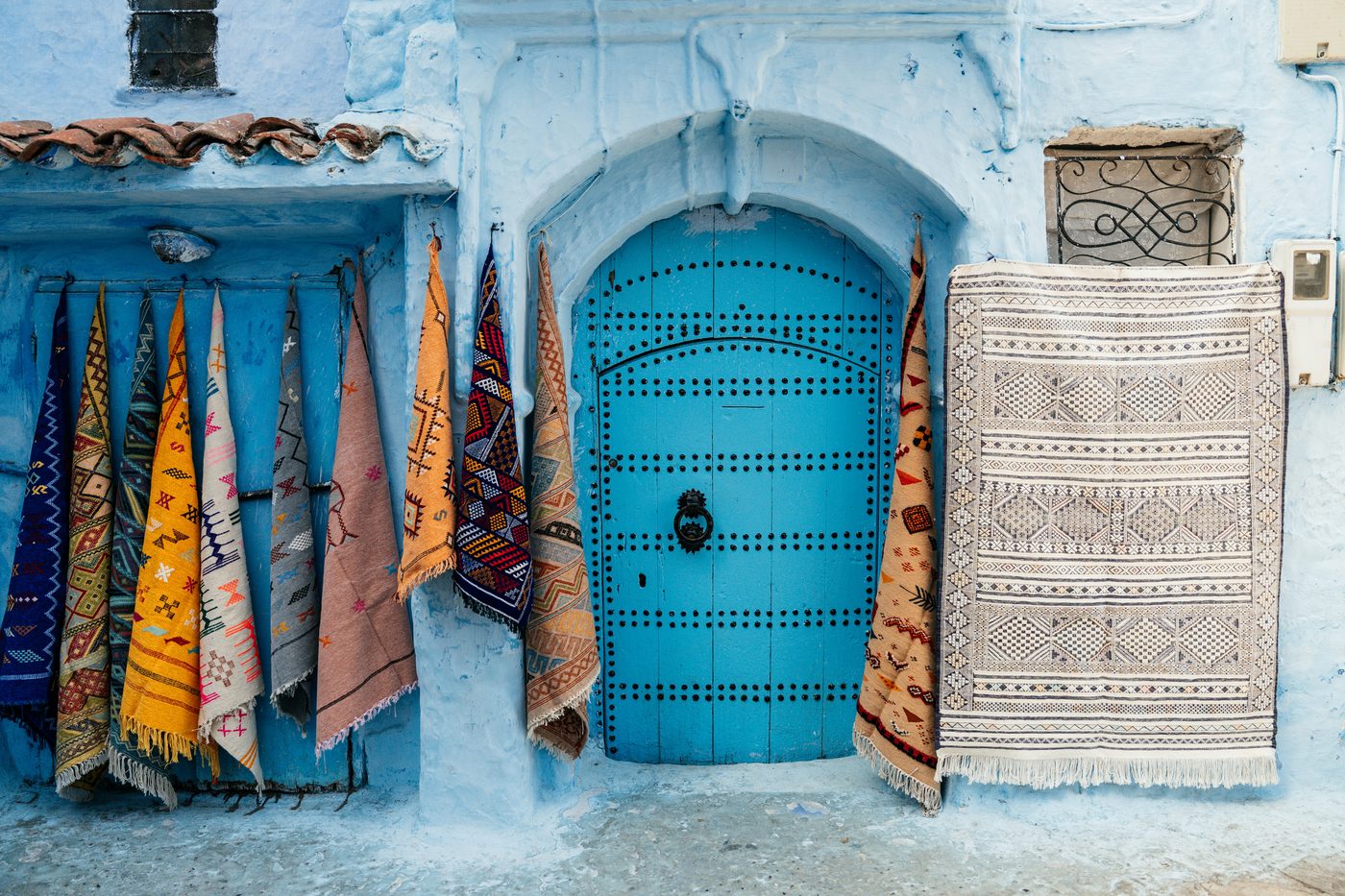
Moroccan rugs displayed in Chefchaouen medina
Home  /  Regions  /  Morocco
Region 03 of 13

Weavings of the
Atlas & Sahara

Moroccan rugs are among the oldest living textile traditions on earth — rooted in the Amazigh (Berber) culture that has woven symbols, stories, and protective talismans into pile and flat-woven cloth for millennia. From the snow-capped Atlas Mountains to the pre-Saharan plains, each tribe developed a visual language entirely its own.

2500+ yrs
Amazigh Tradition
40+
Distinct Tribal Styles
Wool
Natural Undyed & Dyed
Knot Type
Asymmetrical (Berber) · Also flat-woven
Primary Fiber
Undyed natural wool · Hand-spun
Key Regions
Middle Atlas · High Atlas · Haouz · Marrakech
Iconic Styles
Beni Ourain · Azilal · Boucherouite · Kilim
Foundation
Wool on wool · Cotton on wool

Symbols Woven
into Wool

Unlike Persian or Turkish rugs — which developed formal court traditions alongside village weaving — Moroccan textiles are almost entirely tribal in origin. The women who weave them are also their designers, encoding geometric symbols that represent fertility, protection, water, mountains, and the eye against evil.

Because these rugs were made for personal use rather than export markets, the designs were never standardized for commercial audiences. What survives is fiercely individual — no two Beni Ourain or Azilal pieces are exactly alike.

Simonian carries a curated selection of authentic vintage and contemporary Moroccan pieces, sourced directly and vetted for natural fiber and genuine tribal origin.

Pile (Knotted) Weaving

The Berber knotted pile technique produces the deep, shaggy texture of Beni Ourain rugs — thick natural wool pile on a wool warp. Traditionally woven during winter months in mountain communities, the long pile provides insulation against the cold Atlas winters.

Flat-Woven (Kilim) Traditions

Moroccan flat-weaves — including the kilim and the distinctive Hanbel — are woven with tight, reversible tapestry technique. Vivid stripes and bold geometric blocks characterize Berber flat-weaves from the Middle Atlas and the south.

Boucherouite — Recycled Textiles

A uniquely Moroccan tradition: boucherouite rugs are woven from strips of recycled cotton, synthetics, and cloth. Their wild color combinations and abstract compositions have attracted international collectors and designers for their raw, expressive energy.
Construction & Structure

How Moroccan rugs are built — from foundation to pile

The Berber Knot

Most Moroccan pile rugs use a variant of the asymmetrical (Persian) knot, tied around one warp thread with the pile extending between adjacent warps. In Berber tradition, the knot is often tied loosely to create the characteristically long, shaggy pile of Beni Ourain and High Atlas pieces.

Pile lengths of 1–2 inches are common — far longer than Persian or Turkish equivalents — giving Moroccan pile rugs their soft, tactile quality.

Knot Density

Moroccan pile rugs are generally coarser than Persian work — their value lies in raw material quality and design authenticity, not fineness of weave.

Beni Ourain
40–80 KPSI
Azilal
60–100 KPSI
Haouz
30–60 KPSI
Persian (ref.)
100–800 KPSI

Foundation & Pile

Traditional Moroccan rugs are woven on a horizontal ground loom — a practical adaptation for nomadic weavers, vs. the vertical loom of Persian work. The warp is typically natural un-dyed sheep's wool; the same wool is used for pile, keeping the rug entirely organic.

Boucherouite pieces substitute recycled cloth strips for pile, woven on a cotton or wool warp. These require special cleaning protocols at Simonian due to mixed-fiber content.

A Craft Timeline

Before 700 BCE
Amazigh Origins
The Berber (Amazigh) people of North Africa have woven protective textiles since at least the Iron Age. Symbols encoded in early weaving — diamonds, chevrons, eye forms — persist unchanged in rugs woven today.
7th–14th Century
Islamic Influence
Arab-Islamic culture introduced new design vocabulary to the urban workshops of Fez and Marrakech. Tribal Berber weaving continued independently in the mountains and plains, largely unchanged.
1920s–1960s
Western Discovery
Surrealist artists and European designers — including Le Corbusier — collected and championed Berber rugs, recognizing their abstract compositions as precursors to modern art. International demand began shaping production.
1990s–Present
Global Design Revival
Interior designers worldwide rediscovered Beni Ourain and Azilal rugs for their neutral palettes and organic geometry. Cooperatives working directly with Atlas Mountain weavers now sustain authentic production alongside growing global demand.

Fibers & Materials

What goes into a genuine Moroccan rug — and what to watch for

🐑
Atlas Mountain Wool
The Gold Standard
Wool from Beni Ourain sheep raised at high altitude develops a long, lustrous staple with excellent natural crimp. The undyed ivory and brown tones are inherent to the fleece — not bleached or chemically treated.
🧶
Hand-Spun Yarn
Artisan Spun
Traditional Moroccan rugs use hand-spun wool, producing irregular, slightly textured yarn. This irregularity gives the pile its characteristic depth and light-catching quality — entirely different from machine-spun alternatives.
🌿
Natural Dyes
Henna, Saffron, Indigo
Vintage Azilal and Haouz rugs were dyed with henna (orange-brown), saffron (gold), indigo (blue), and pomegranate rind (yellow-green). These natural colorants age gracefully, mellowing rather than fading.
👗
Recycled Cloth (Boucherouite)
Cotton, Synthetic, Mixed
Boucherouite pile is made from torn strips of used clothing and fabric — cotton, nylon, acrylic. This mixed-fiber construction requires a modified cleaning approach to prevent differential shrinkage.
🧵
Cotton Foundation
Modern Production
Contemporary Moroccan workshop rugs often use a cotton warp for dimensional stability. While less traditional, cotton foundations resist stretching and hold their shape well in varied climates.
⚠️
Synthetic Fiber Blends
Caution Advised
Some contemporary Moroccan export rugs blend acrylic or polypropylene with wool to reduce cost. These cannot be wet-washed safely and show accelerated wear. Simonian identifies synthetic content before any cleaning begins.

Dye Traditions

Henna
Lawsonia inermis · Leaves
Rich red-brown tones produced by the same plant used for body art. Common in southern Moroccan tribal work; henna-dyed rugs develop warm amber patina over decades.
Indigo
Indigofera tinctoria · Leaves
Traded across the Sahara for centuries, indigo yielded the deep blue tones found in Atlas kilims and Fez workshop rugs. Naturally fast to light — a benchmark of quality in vintage Moroccan work.
Saffron & Pomegranate
Crocus sativus · Punica granatum
Saffron produced brilliant gold tones used in festive and ceremonial textiles. Pomegranate rind yielded cooler yellow-green. Both require an alum mordant; well-mordanted examples hold color for generations.
Henna Green
Fermented over-dye technique
Layering henna over an indigo base produces muted green tones characteristic of some Middle Atlas rugs — an over-dye technique discovered empirically by weavers with access to both plants.
Synthetic Aniline
Post-1890 Chemical Dyes
Synthetic dyes entered Moroccan markets in the late 19th century. Early anilines are notoriously fugitive — bright reds and oranges in some mid-20th century pieces may bleed significantly when wet.
Natural Undyed Wool
Sheep fleece · Natural pigment
The hallmark of Beni Ourain: ivory and dark brown tones come entirely from the natural fleece of black and white Atlas sheep — no dye whatsoever. Completely colorfast and safe to wet-wash.

Moroccan Rug Styles

The major weaving traditions we source — from the Atlas highlands to the Saharan plains

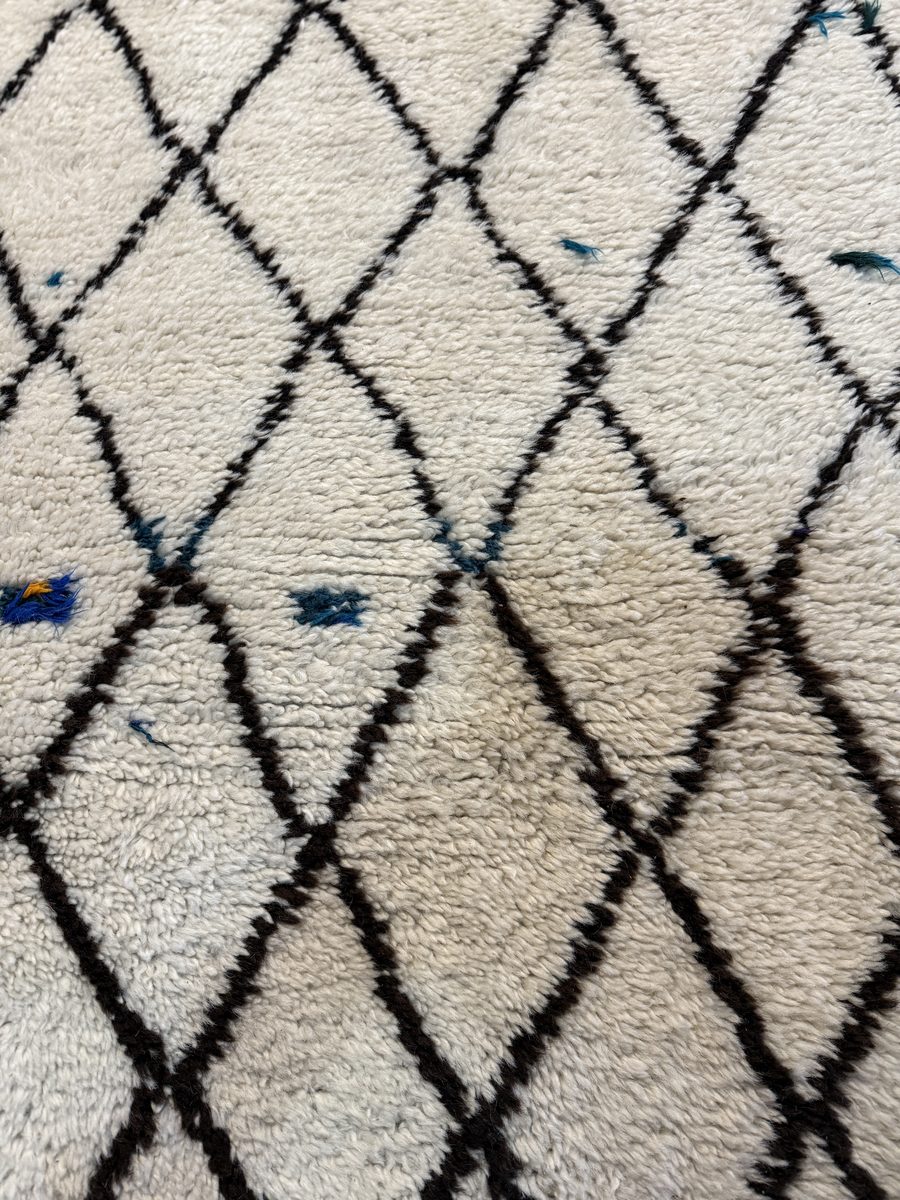
Beni Ourain rug — ivory field with black diamond lattice
Middle Atlas · Berber Tribe
Beni Ourain
The most recognized Moroccan style worldwide: thick ivory pile with sparse dark diamond or lozenge patterns. Always undyed natural wool — the ivory and near-black tones come entirely from the fleece of Atlas sheep, with no dye involved whatsoever.
Undyed Wool Ivory + Black Long Pile Tribal
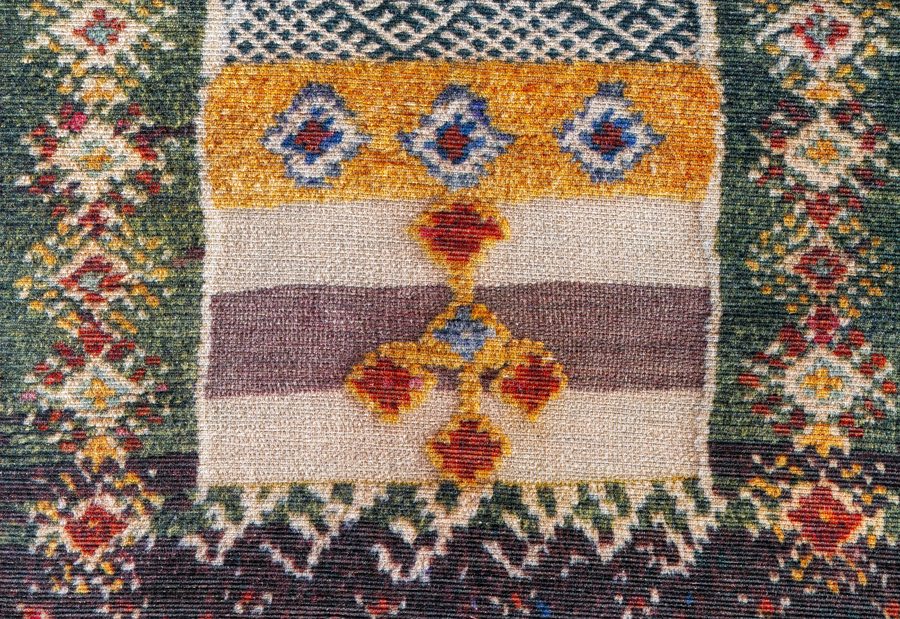
Moroccan rug — green field with gold and ivory panel detail
Haouz Plain · Marrakech Region
Haouz & Marrakech Pile
Pile rugs from the Haouz plain around Marrakech blend Berber tribal geometry with Arab decorative motifs — a visual record of centuries of cultural exchange. Rich jewel-toned fields with intricate panel borders distinguish this style from Atlas mountain work.
Mixed Heritage Jewel Tones Wool Pile Geometric
Azilal rug — colorful symbolic motifs on ivory ground
High Atlas · Azilal Province
Azilal
More colorful and expressive than Beni Ourain, Azilal rugs feature vivid geometric symbols — crosses, stars, zigzags — scattered across an ivory or cream ground. Each symbol carries personal meaning to the weaver. No two pieces are alike.
Multicolor Symbolic Motifs Wool Pile Tribal
Moroccan kilim flat-weave rug in riad courtyard setting
Atlas Mountains · Flat-woven
Moroccan Kilim (Hanbel)
Bold geometric patchwork and vivid color fields characterize Moroccan flat-woven kilims. The hanbel is a double-faced flat-weave — entirely reversible, with the same bold pattern on both faces. Often seen displayed in riads and open-air markets throughout Morocco.
Flat-woven Reversible Bold Color Natural Dyes
Boucherouite rug — vibrant recycled cloth textile
Nationwide · Recycled Textile
Boucherouite
Woven from strips of recycled clothing — cotton, acrylic, nylon — boucherouite rugs are wildly colorful and entirely abstract. Their painterly compositions have attracted serious collectors and designers globally since the 1990s. No two are remotely alike.
Recycled Fiber Abstract Multicolor Collectible
Taznakht rug — green field with geometric panel motifs, Anti-Atlas Mountains
Anti-Atlas Mountains · Souss Region
Taznakht & Ouarzazate
From the arid Anti-Atlas south of Marrakech, Taznakht rugs feature warm earthy tones — terracotta, ochre, camel — in distinctive lozenge and diamond patterns. A less-known but increasingly sought-after regional tradition prized for its desert palette.
Earthy Palette Anti-Atlas Lozenge Pattern Natural Dyes

How We Clean
Moroccan Rugs

Moroccan wool requires gentle handling — long pile and mixed-fiber constructions demand a protocol different from Persian or Turkish work

01
Fiber Identification
We begin by identifying the pile material — natural wool, synthetic blend, or boucherouite mixed-fiber. This determines water temperature, pH, and agitation limits for the entire process.
02
Dye Stability Testing
Spot-test all colored areas before any wetting. Azilal rugs with synthetic aniline dyes may bleed — we test isolated fibers before committing to full immersion.
03
Gentle Immersion Wash
Natural wool Moroccan rugs — especially Beni Ourain — are washed in cool, pH-neutral water with lanolin-preserving wool soap. No hot water, which would mat and felt the long pile.
04
Boucherouite Protocol
Mixed-fiber boucherouite pieces are hand-washed with careful attention to differential shrinkage between cotton, acrylic, and wool components. No high-heat drying under any circumstances.
05
Flat Drying & Pile Direction
Moroccan pile rugs are always dried flat — never hung, which would stretch the foundation under the weight of saturated wool. Pile direction is set by hand during the final drying stage.
06
Lanolin Restoration
Natural Atlas Mountain wool retains lanolin — the wax that gives it luster and water resistance. We finish with a lanolin-restoration rinse that replenishes what washing removes, restoring the wool's natural softness and sheen.

Bring Your Moroccan Rug
Back to Life

From Beni Ourain heirlooms to vintage Azilal pieces, our team has the expertise to clean and restore Moroccan textiles of every type.

Clean My Moroccan Rug → Browse Moroccan Rugs → Design a Custom Rug →