Pakistan's rug industry stands at a remarkable crossroads — combining the tribal vocabulary of Afghan refugee weavers with the finest New Zealand Merino wool and rigorous workshop production standards. From the classic Bokhara gul patterns of Lahore to the bold Peshawar adaptations of classic Persian designs, Pakistani rugs represent some of the best value in the global market for hand-knotted pile.
Pakistan's emergence as a major rug-producing nation is directly tied to the Afghan refugee crisis of the 1980s. As millions of Afghan weavers — many from the Tekke, Ersari, and Khal Mohammadi tribes — settled in the Peshawar valley, they brought their weaving traditions with them. Pakistani workshop owners recognized an extraordinary opportunity: world-class tribal weavers, access to premium New Zealand Merino wool, and the organizational infrastructure to produce at scale for Western markets.
The result is a rug industry that combines the authenticity of Afghan tribal design with the consistency and quality control of a modern workshop system. Pakistani Bokhara rugs woven from NZ Merino are widely considered among the best-value hand-knotted pieces available — the wool quality rivals much more expensive Persian production.
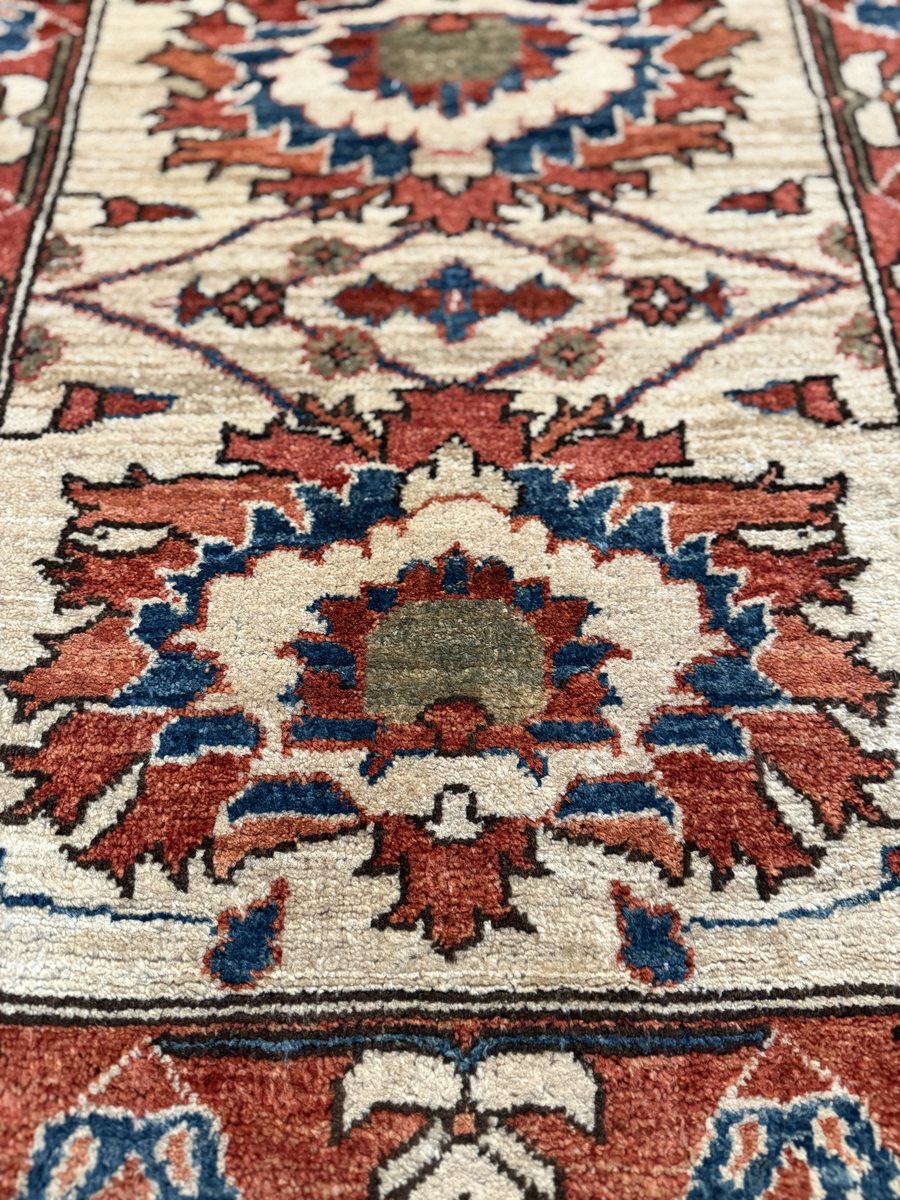
The Peshawar style — adapting classical Persian, Caucasian, and Central Asian designs into large-format pieces with a deliberately softened, washed finish — has become one of the dominant forces in the contemporary decorative rug market.
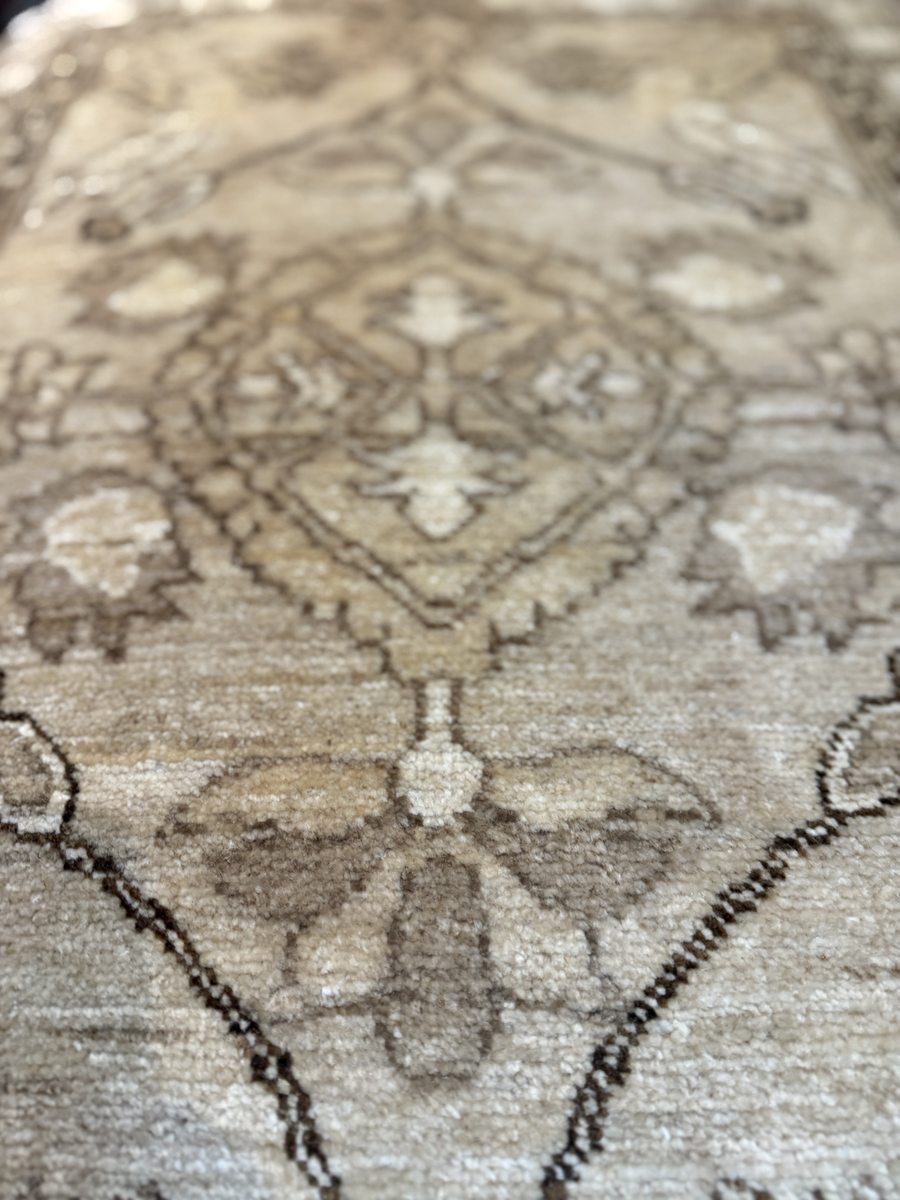
Large-format rugs adapting classical designs — Herati, Ziegler, Caucasian geometric — in soft, washed palettes with excellent NZ Merino wool. The Peshawar style has defined the "decorative antique look" in contemporary interiors for three decades.
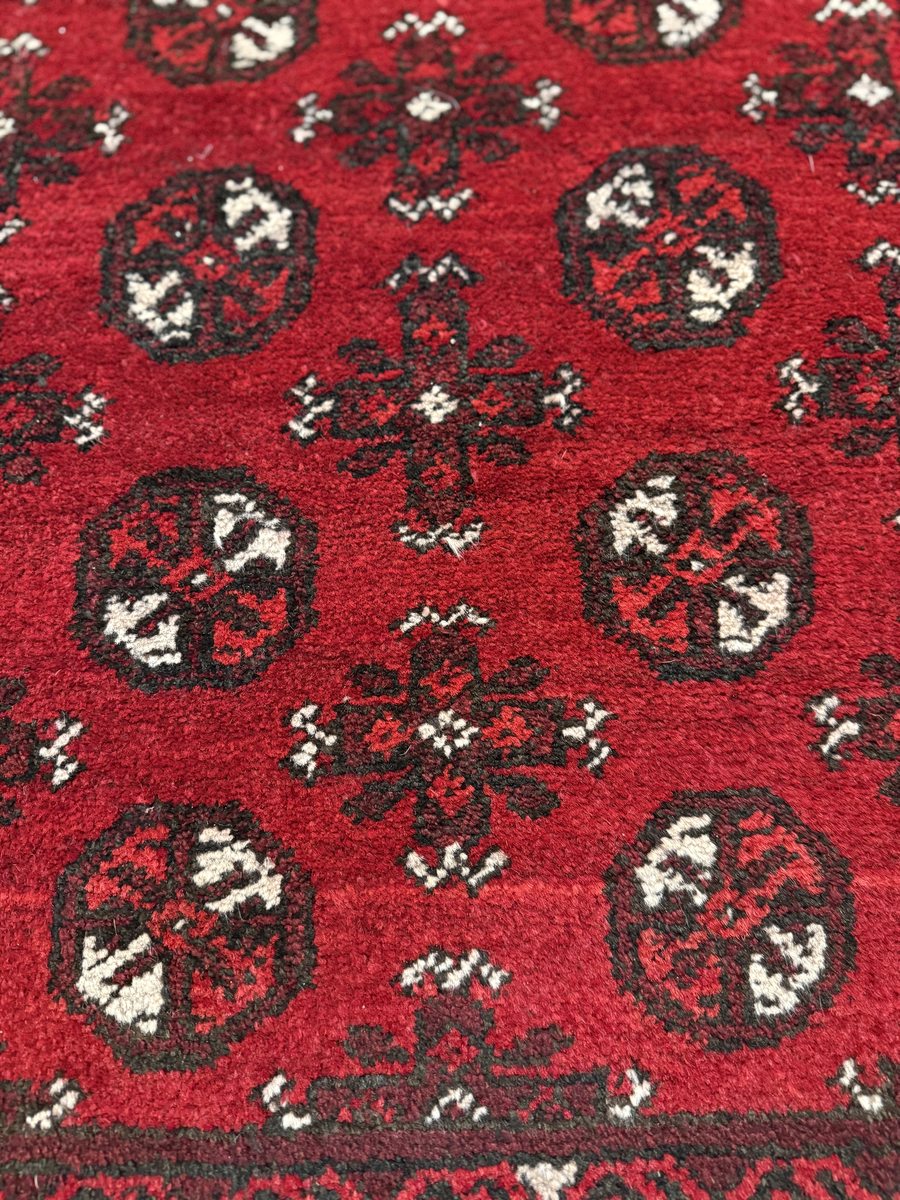
The classic Afghan gul-repeat design produced in Lahore workshops using premium wool and consistent chrome dyes. Pakistani Bokhara rugs maintain the deep red palette of the Afghan tradition but with tighter quality control and more uniform knotting than typical tribal pieces.
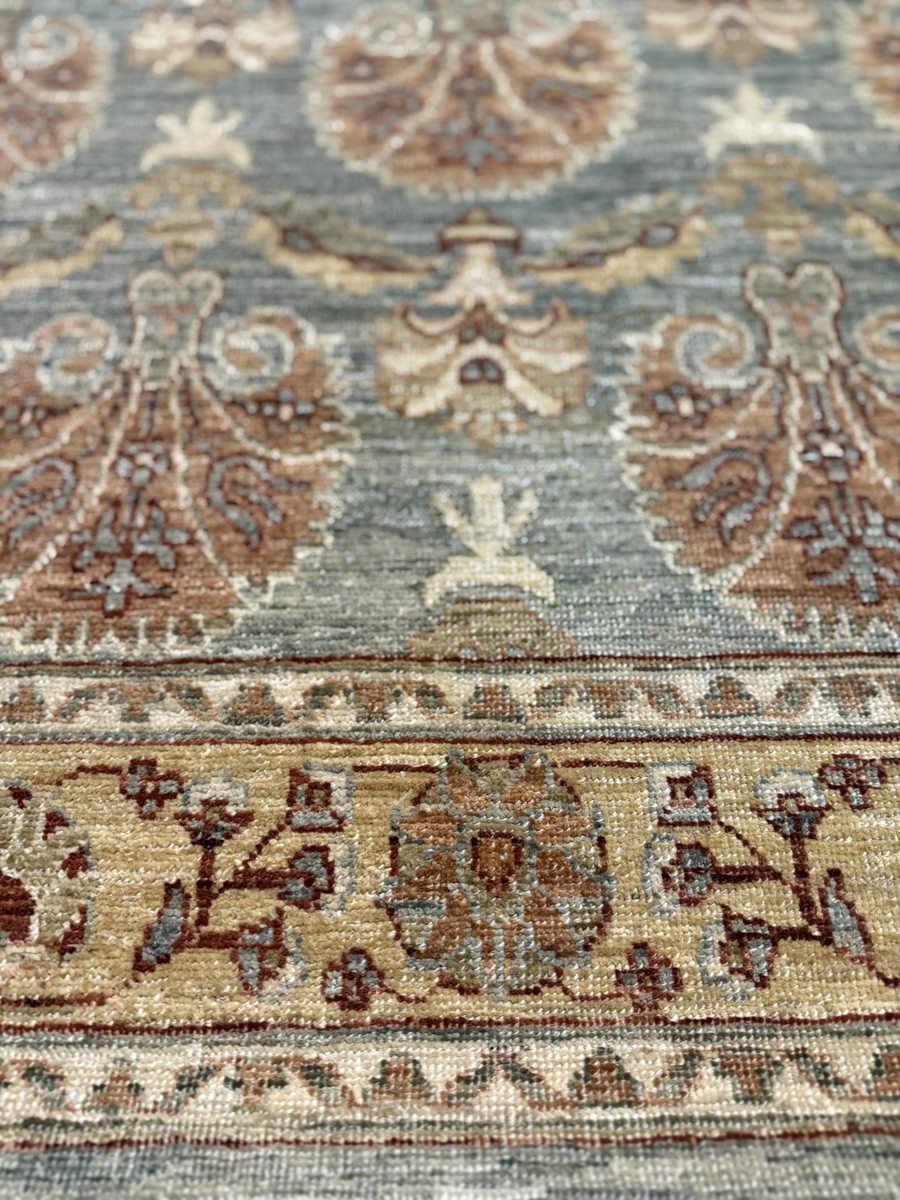
A growing segment of Pakistani production uses vegetable dyes on hand-spun Afghan-style wool, producing the warm, naturally aged palette known as "Chobi." These pieces are specifically designed to appeal to collectors who want the look of an antique Afghan rug with modern production quality.
What makes Pakistani rugs technically distinctive — and why NZ Merino matters
The finest Pakistani workshop rugs are made from New Zealand Merino — one of the world's premium wool fibers, with an extra-fine staple, exceptional softness, and outstanding dye uptake. NZ Merino produces a pile that is noticeably softer and more lustrous than coarser domestic wools, and it holds chrome dyes with excellent color depth and fastness.
The use of NZ Merino is a deliberate quality signal — Pakistani producers who specify it are targeting the premium export market and hold to higher standards across the production process.
Pakistani workshop rugs span a wide range of quality — from coarse tribal-style production to fine Peshawar pieces that rival Persian workshop knotting.
Pakistani workshops use chrome (acid) dyes as their standard — and when properly applied to quality wool, the results are excellent. Chrome dyes on NZ Merino produce rich, saturated color that is highly resistant to fading and bleeding. The best Pakistani producers test dye lots for fastness before weaving begins.
The characteristic Peshawar "washed" look is achieved after weaving — chrome-dyed rugs are subjected to a controlled wash and bleach process that softens the palette to the warm, muted tones the style is known for.
What goes into a quality Pakistani rug — and how to identify the premium tier
Four defining traditions — from tribal Bokhara to the softened Peshawar aesthetic
Among the most straightforward rugs to clean — premium NZ Merino and stable chrome dyes respond well to professional wet washing
Whether it's a classic Bokhara, a Peshawar-style piece, or a Chobi vegetable-dye rug, our team understands the specific requirements of Pakistani wool production.