Geometry from the
Age of Sultans
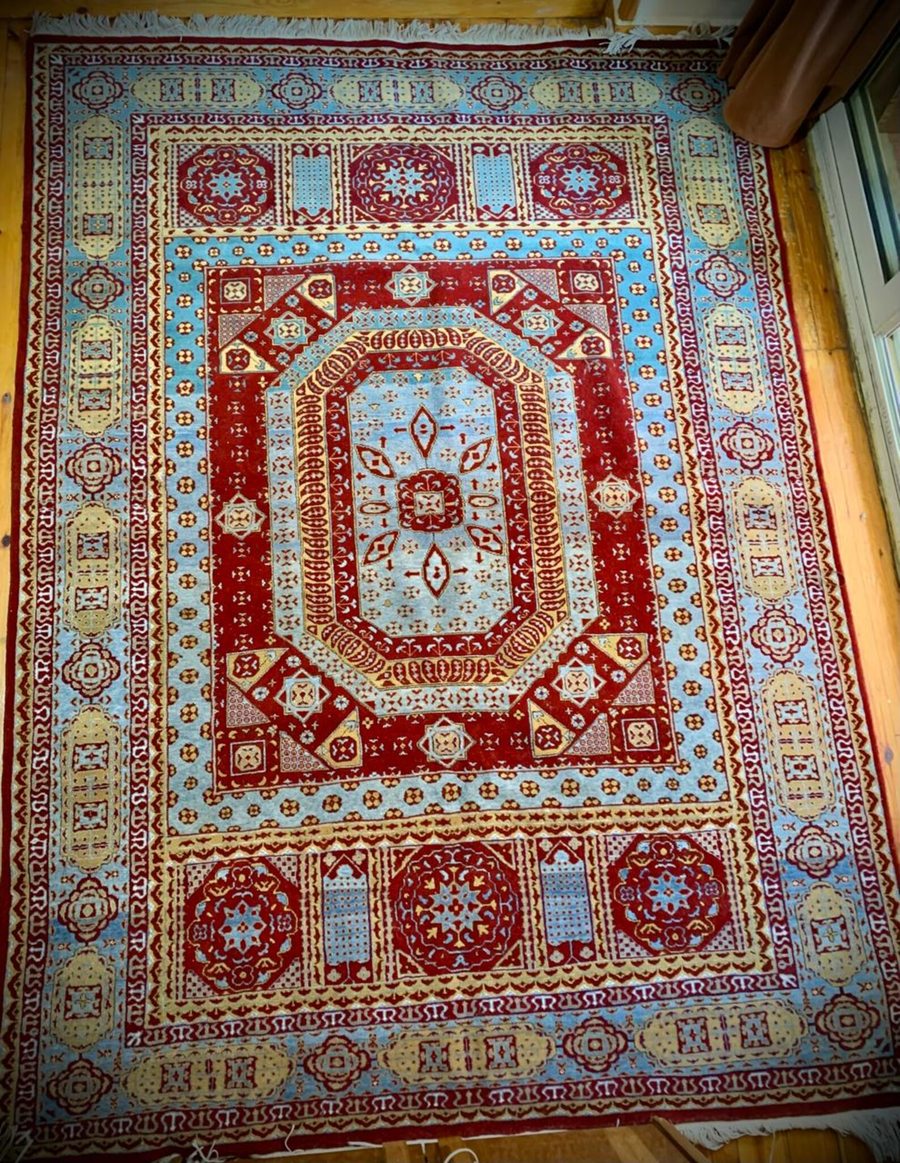
The Mamluk sultans who ruled Egypt from 1250 to 1517 presided over one of the most sophisticated rug-weaving cultures the world has ever seen. Mamluk carpets — recognized by their extraordinary radial geometric compositions, cypress-tree motifs, and cool palette of crimson, blue-green, and soft yellow — were exported to European courts and remain among the most prized antiques in the field.
After the Ottoman conquest, Cairo workshops absorbed Turkish design vocabulary while retaining their technical mastery. The 20th century brought a new innovation: Egyptian weavers discovered that mercerized cotton — cotton treated with caustic soda to create a permanent silk-like luster — could produce pile rugs with extraordinary sheen at a fraction of the cost of silk.
Simonian carries authentic Egyptian pile rugs spanning these traditions, from classical geometric compositions to the lustrous mercerized workshop pieces that continue to be produced in Alexandria and Cairo today.
Mamluk Geometric Tradition
Pure geometric design — no floral motifs, no pictorial elements. Mamluk carpets organize their field into radiating star-and-polygon systems of breathtaking mathematical precision. The S-spun wool and distinctive palette are instantly recognizable to any serious collector.
Cairene Ottoman Workshops
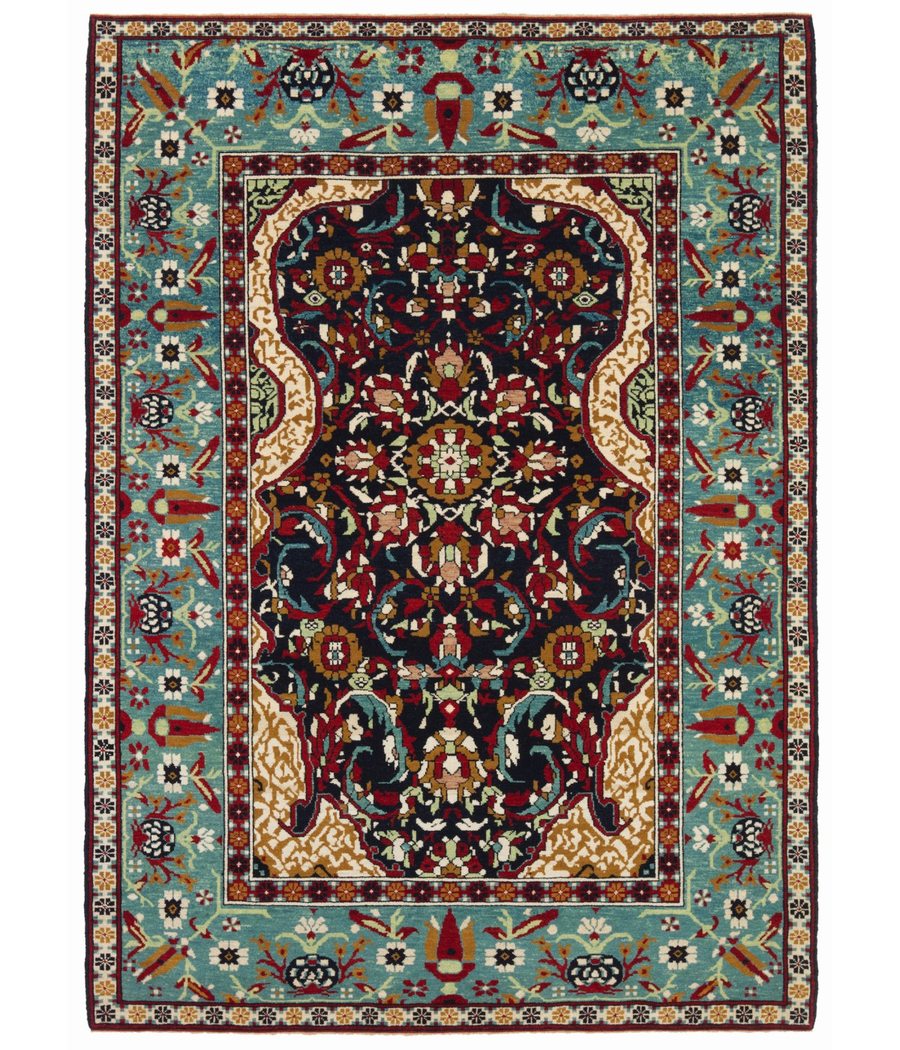
Following the 1517 Ottoman conquest, Cairo workshops began producing rugs for the imperial court in Istanbul. These pieces blend Ottoman floral arabesque patterns with the technical precision of Egyptian weaving — creating a uniquely hybrid tradition.
Modern Mercerized Cotton
Egypt's 20th-century innovation: mercerized cotton pile rugs that mimic the luster of silk at a sustainable price point. Alexandria and Cairo remain the world's primary sources for these distinctive pieces, which are often mistaken for silk by untrained eyes.