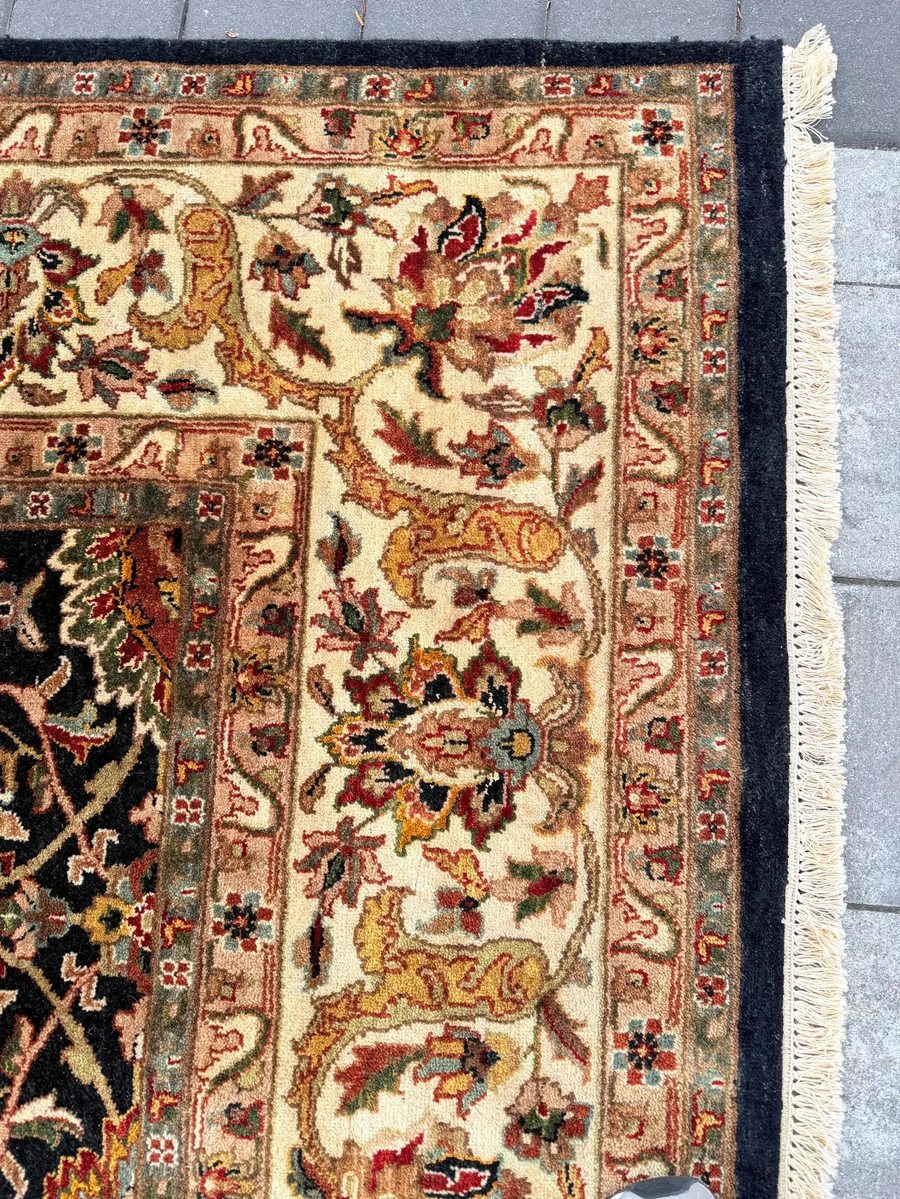
From Mughal Court
to Global Workshop
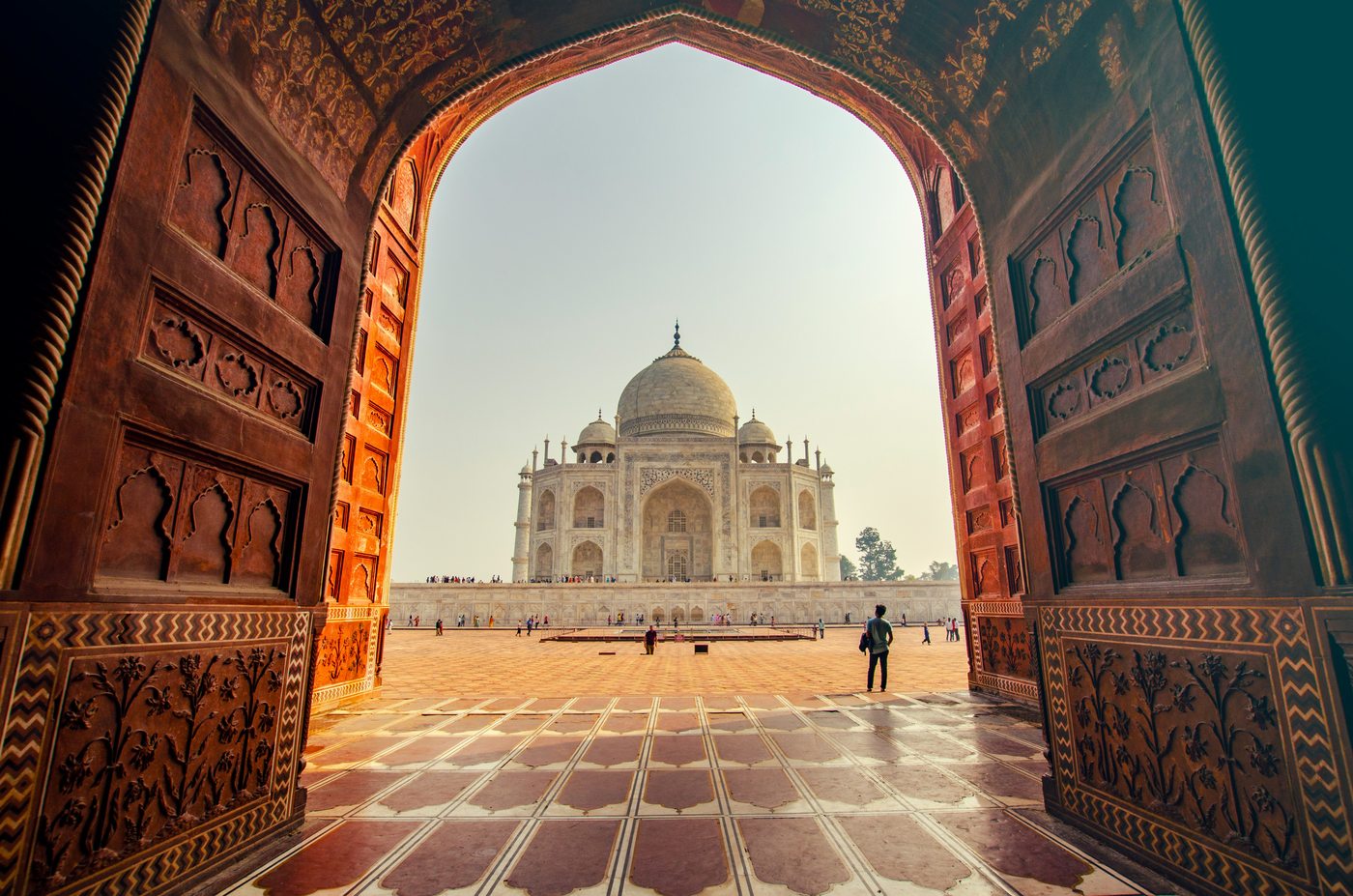
When Emperor Akbar established royal weaving workshops in Agra and Fatehpur Sikri around 1580, he brought Persian master weavers from Kashan and Tabriz to train Indian craftsmen. The resulting hybrid — Persian design vocabulary executed in Indian wool, with Indian color sensibility — produced some of the most magnificent carpets in history. These early Mughal pieces, now held in major museums, are among the most valuable textiles ever made.
The tradition spread from the royal workshops to commercial production in Agra, Jaipur, and the Bhadohi-Mirzapur corridor of Uttar Pradesh — which remains the largest rug-producing region in the world by volume today. Kashmir developed its own silk pile tradition, producing extraordinarily fine pieces that rival anything made in Persia or China.
India's rug industry today spans every quality tier — from the finest hand-knotted Kashmir silks to mass-produced tufted pieces. Simonian sources only from the hand-knotted workshop tier, where Indian production offers exceptional value relative to comparable Persian output.
Agra Workshop Tradition
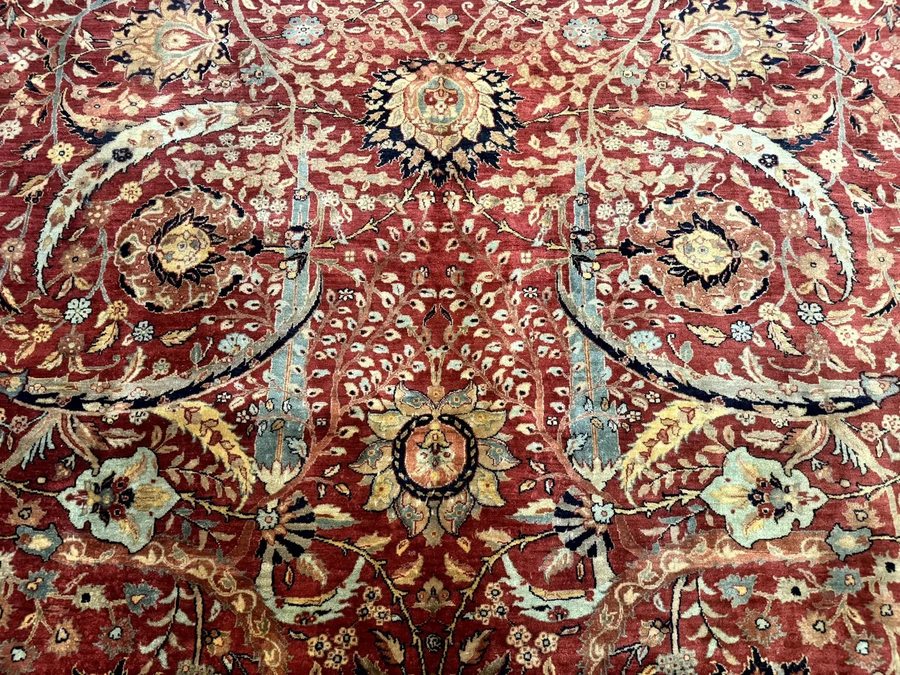
Established under Mughal patronage and still operating today, Agra workshops produce large-format carpets in classical Persian designs — particularly floral medallion compositions — using Indian wool on cotton foundations. Agra production is characterized by a slightly open, soft pile and a warm, jewel-toned palette.
Kashmir Silk Pile
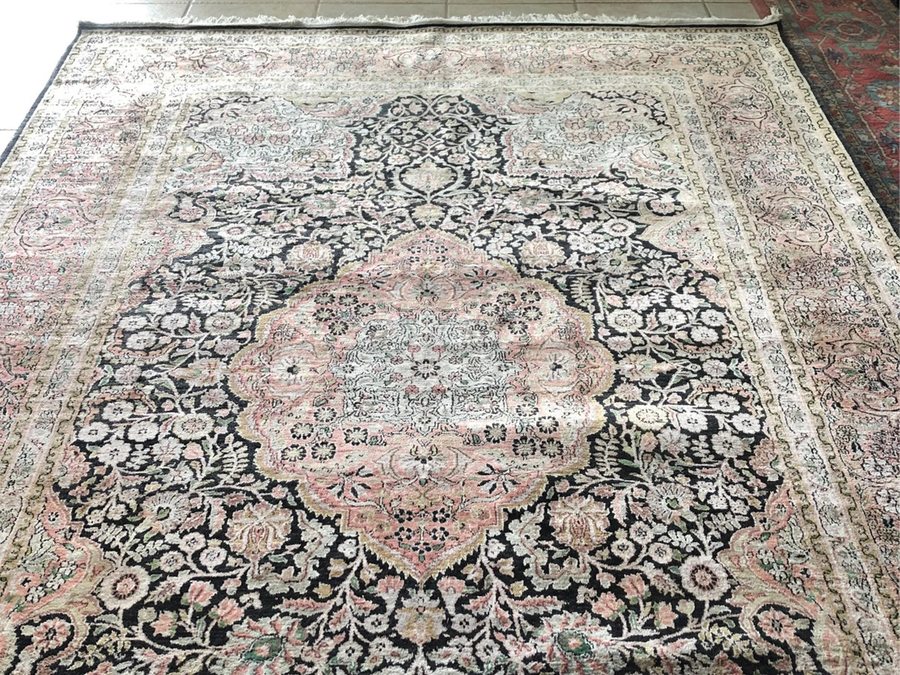
The Himalayan valley of Kashmir produces India's finest rugs — intricately knotted silk pile pieces with knot counts that rival the best Persian silk workshops. Kashmir silk rugs are characterized by extraordinarily fine drawing, luminous color, and a gossamer lightness that makes them among the most remarkable textiles produced anywhere in the world.
Jaipur & Rajasthan Production
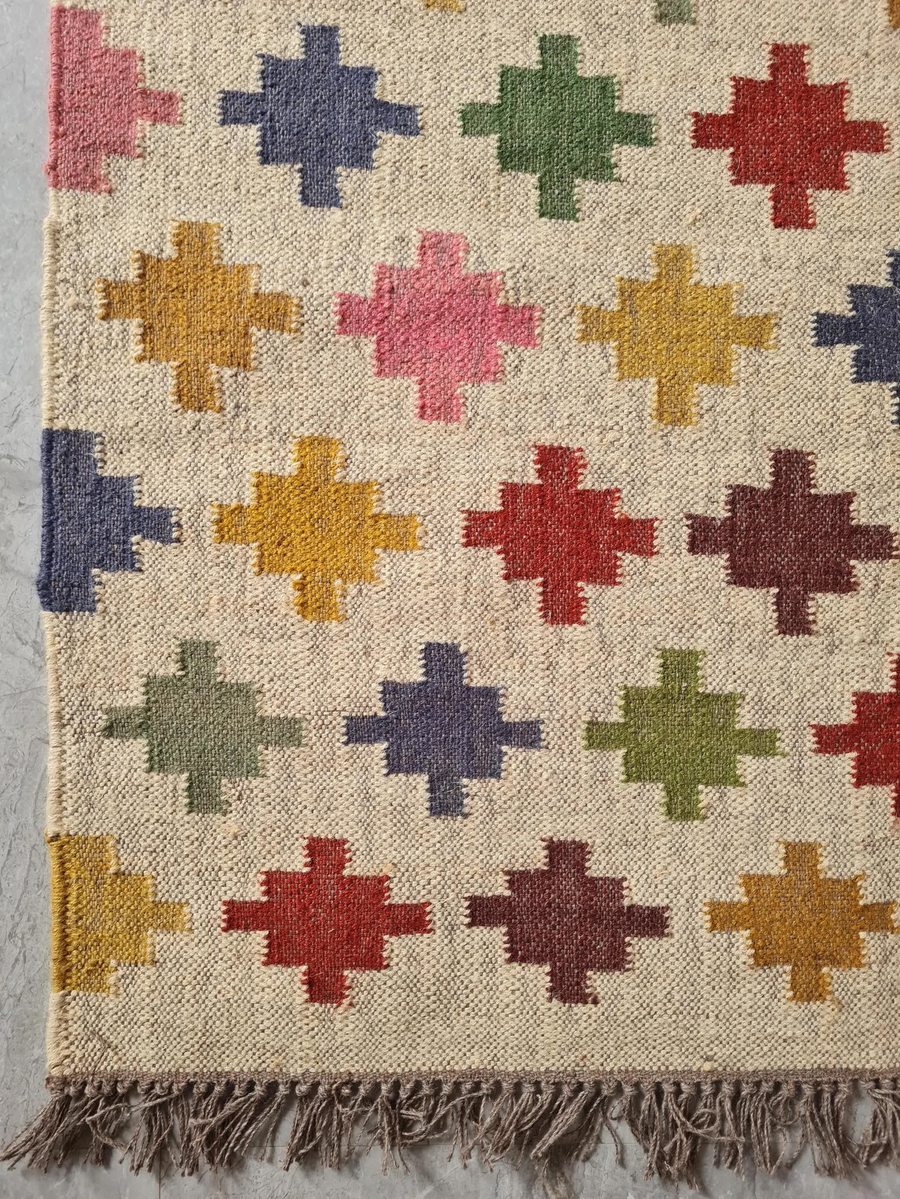
Jaipur workshops produce a wide range of hand-knotted pieces, from affordable wool rugs to premium production rivaling Agra quality. The Rajasthan tradition also encompasses distinctive flat-woven dhurries — cotton or wool kilims in bold geometric patterns that represent India's indigenous weaving identity alongside the imported Mughal pile tradition.