The Red Rugs of
Central Asia
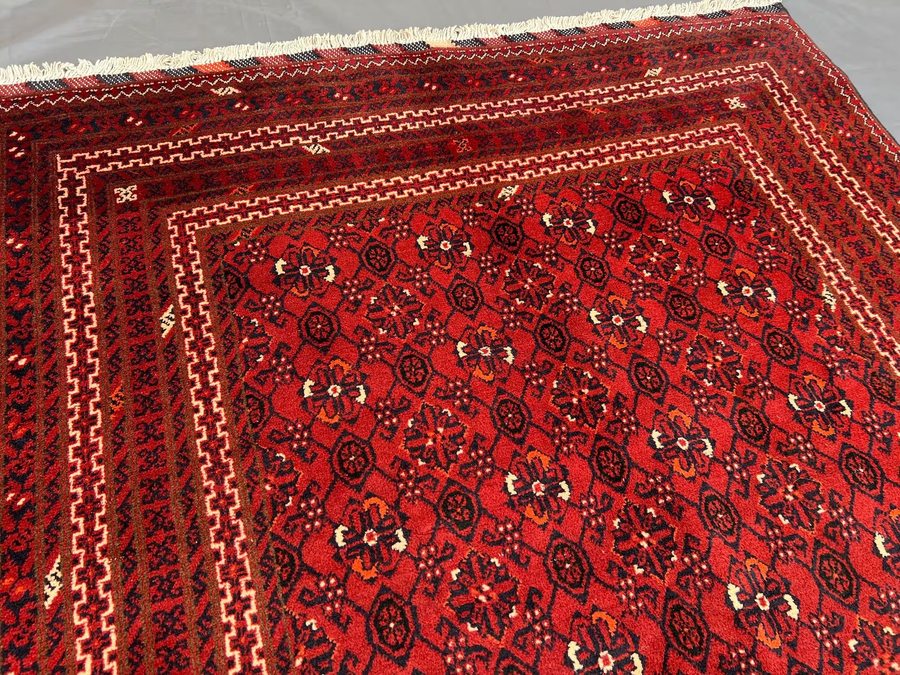
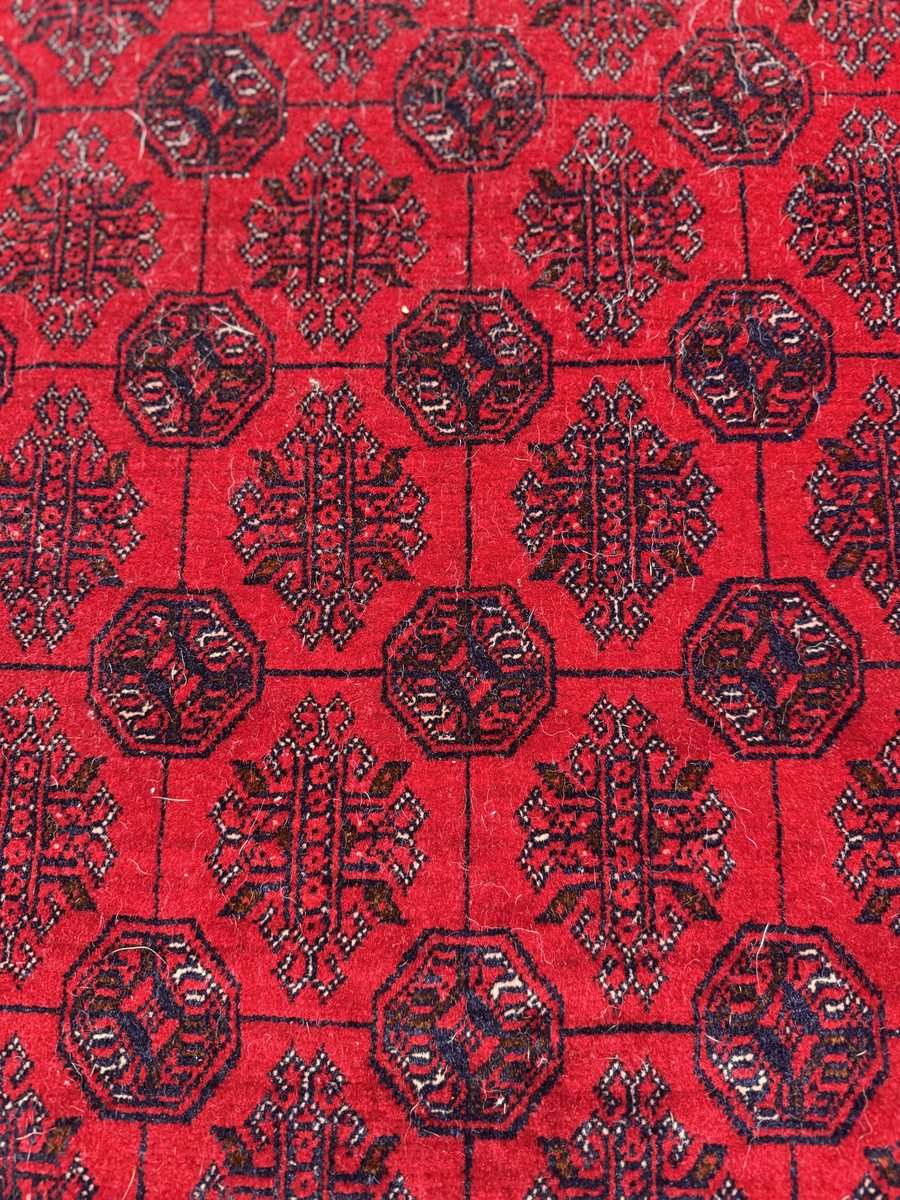
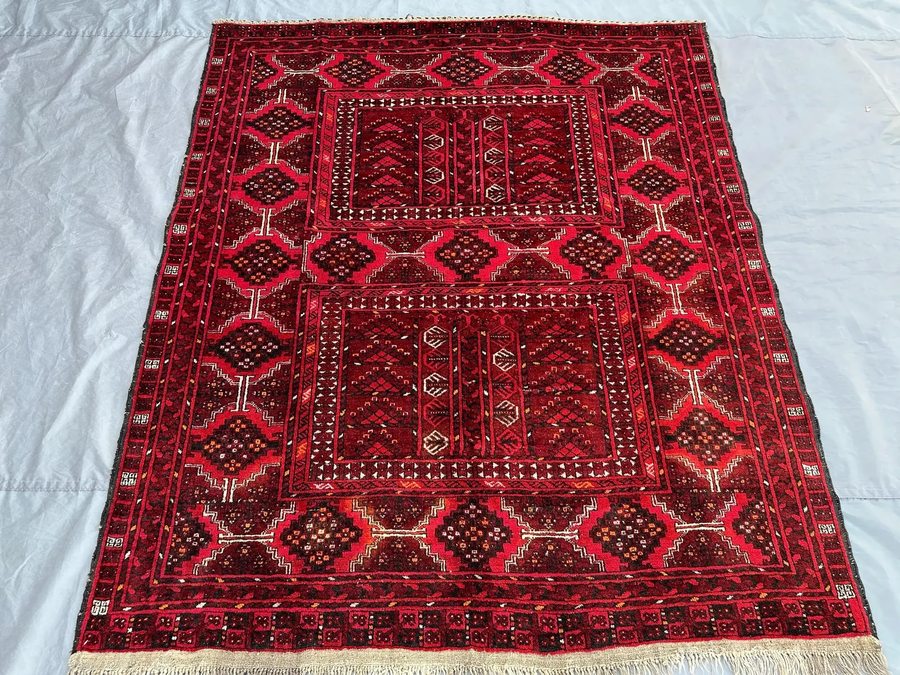
The deep, saturated madder red that defines Afghan rugs is not a stylistic choice — it is a tribal identity. Each of the major Afghan weaving tribes uses a specific vocabulary of gul (literally "flower" in Persian, but referring to the octagonal or geometric medallion motifs) that functions as a clan emblem, woven into the rug as a mark of belonging.
The Tekke, Yomut, Ersari, and Khal Mohammadi tribes each produce rugs that an experienced eye can attribute to their source without seeing a label. This tribal specificity — combined with the exceptional wool quality produced by Afghanistan's high-altitude sheep — makes genuine Afghan tribal rugs among the most collectible pieces in the market.
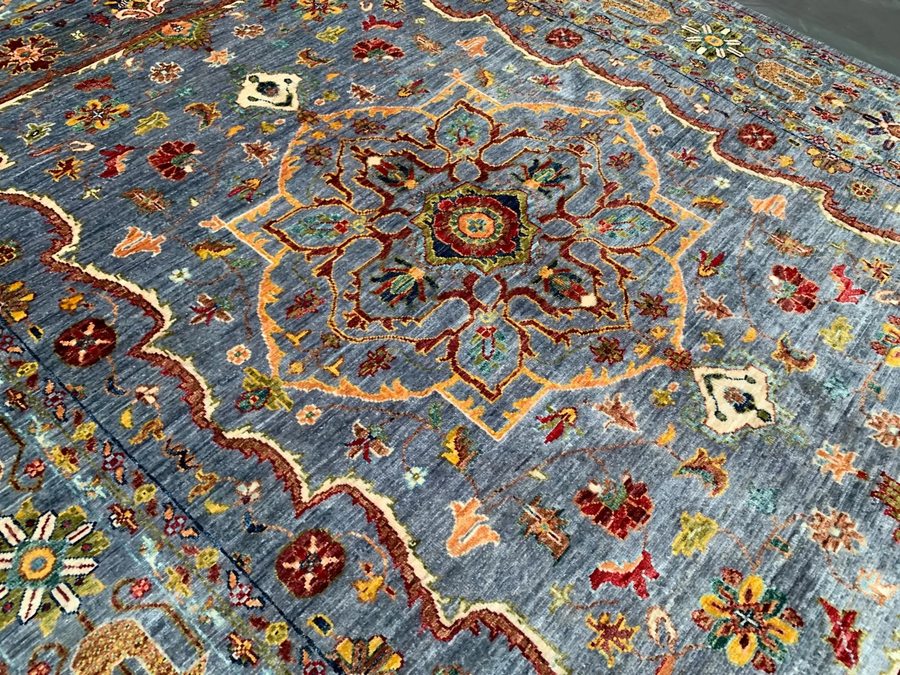
The 20th century brought a new direction: Ziegler-wash Afghan rugs, in which tribal designs are woven in softer tones and then hand-washed to create a deliberately aged, palette-softened finish that appeals strongly to contemporary Western interiors.
Tribal Bokhara (Gul) Tradition
The classic Afghan style — named for the Central Asian city through which these rugs were historically traded. Deep madder red field with rows of precisely spaced gul (octagonal medallions) in navy, ivory, and accent colors. Each tribe's gul has a distinct shape that identifies its origin.
Ziegler Wash Technique
A 20th-century finishing process in which newly woven Afghan rugs are chemically washed and sun-bleached to soften their palette and simulate decades of natural aging. The result — muted roses, dusty blues, warm ivory grounds — has become one of the most sought-after looks in contemporary interior design.
Kilim & Flat-woven Pieces
Afghan tribal weavers also produce bold flat-woven kilims alongside their pile work — typically featuring large geometric shapes in the same madder-red and indigo palette. These reversible pieces are woven on the same horizontal looms as nomadic work across Central Asia.