From Tibetan Exile
to Global Craft
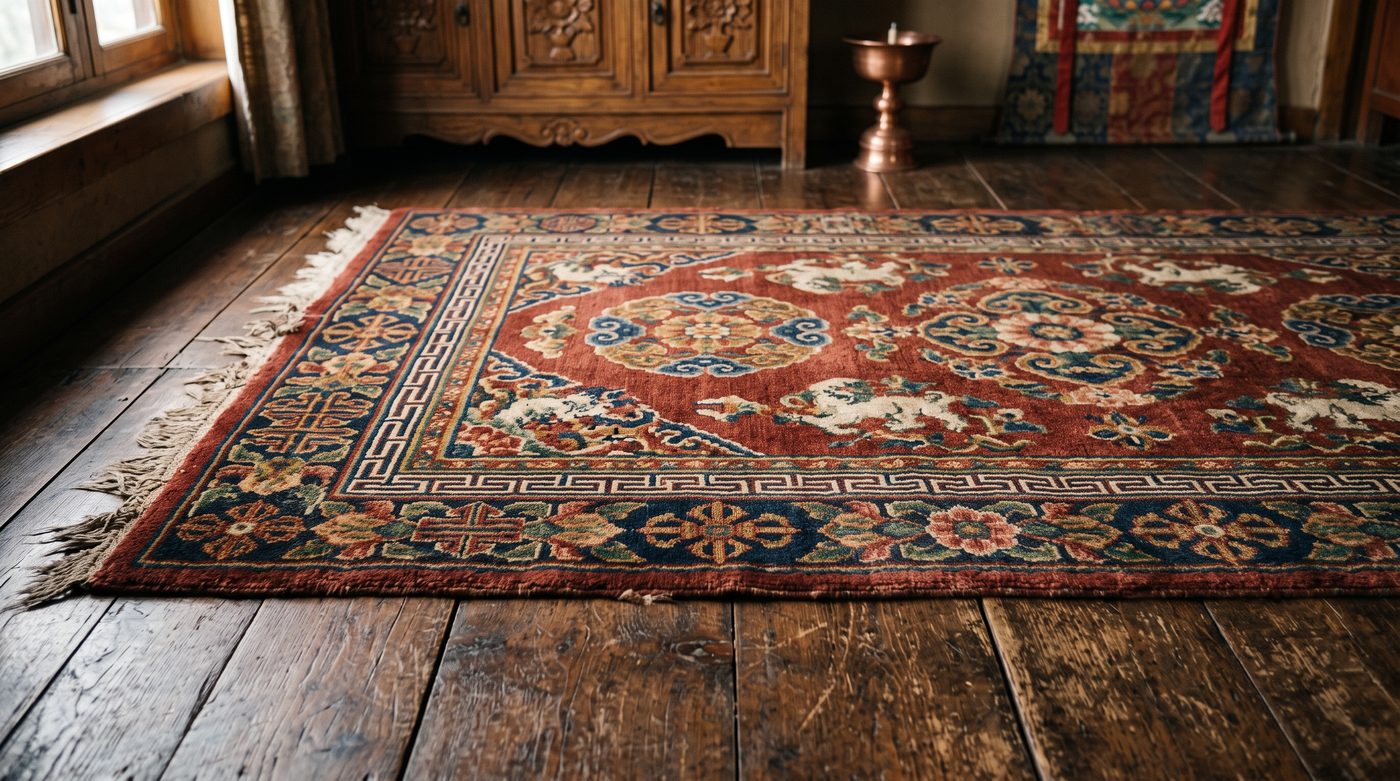
When Tibetan refugees arrived in Nepal in the early 1960s, they brought with them one of Central Asia's oldest and most distinctive weaving traditions. The Tibetan gauge-rod knot — a unique looped technique that wraps yarn around a metal rod to create even, dense pile — had been perfected over centuries in the monasteries and homes of the Tibetan Plateau.
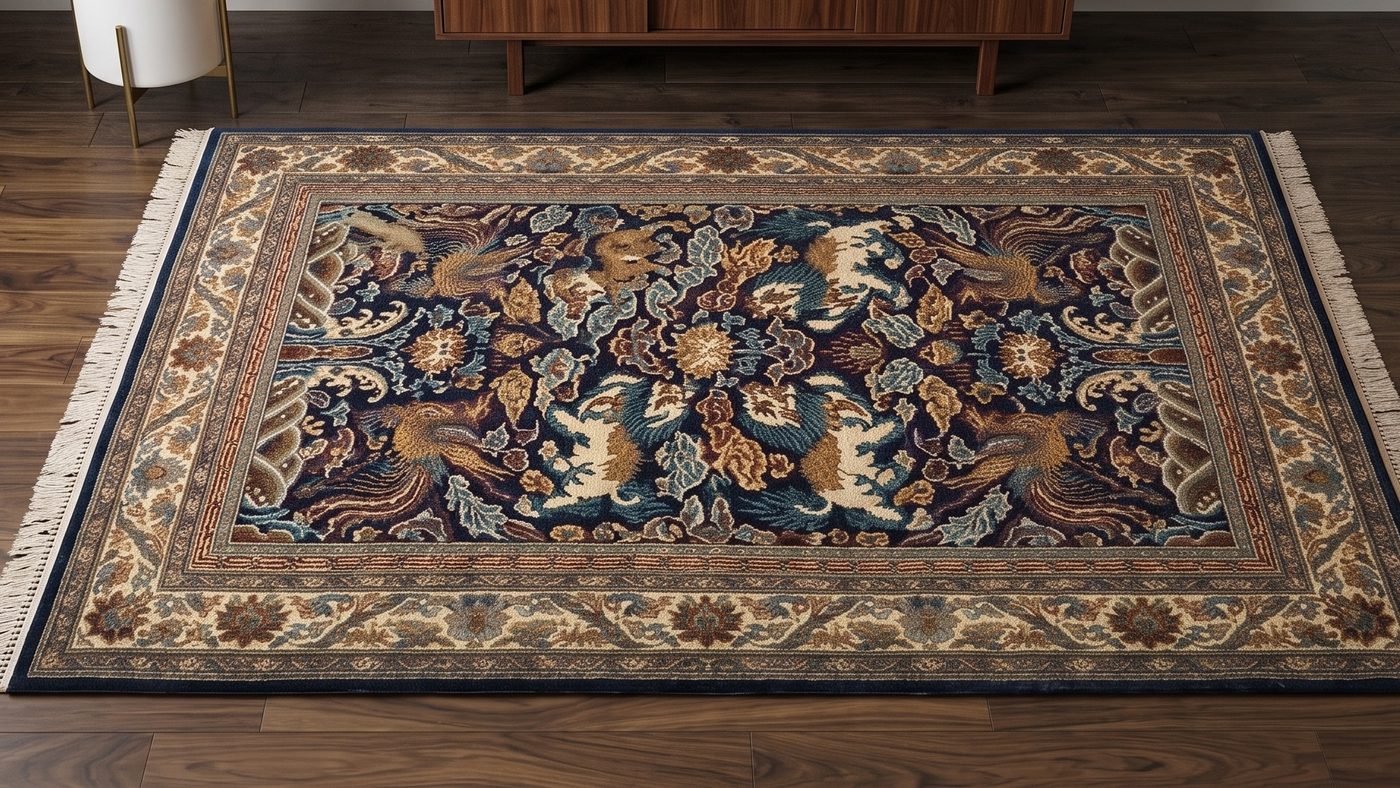
In the Kathmandu Valley, this ancient technique found new expression. Swiss and German aid organizations helped establish carpet workshops as a livelihood for refugee communities, and by the 1980s, Nepali carpets had become the country's most important export. The industry evolved from producing traditional Tibetan designs to collaborating with international designers on bold contemporary pieces.
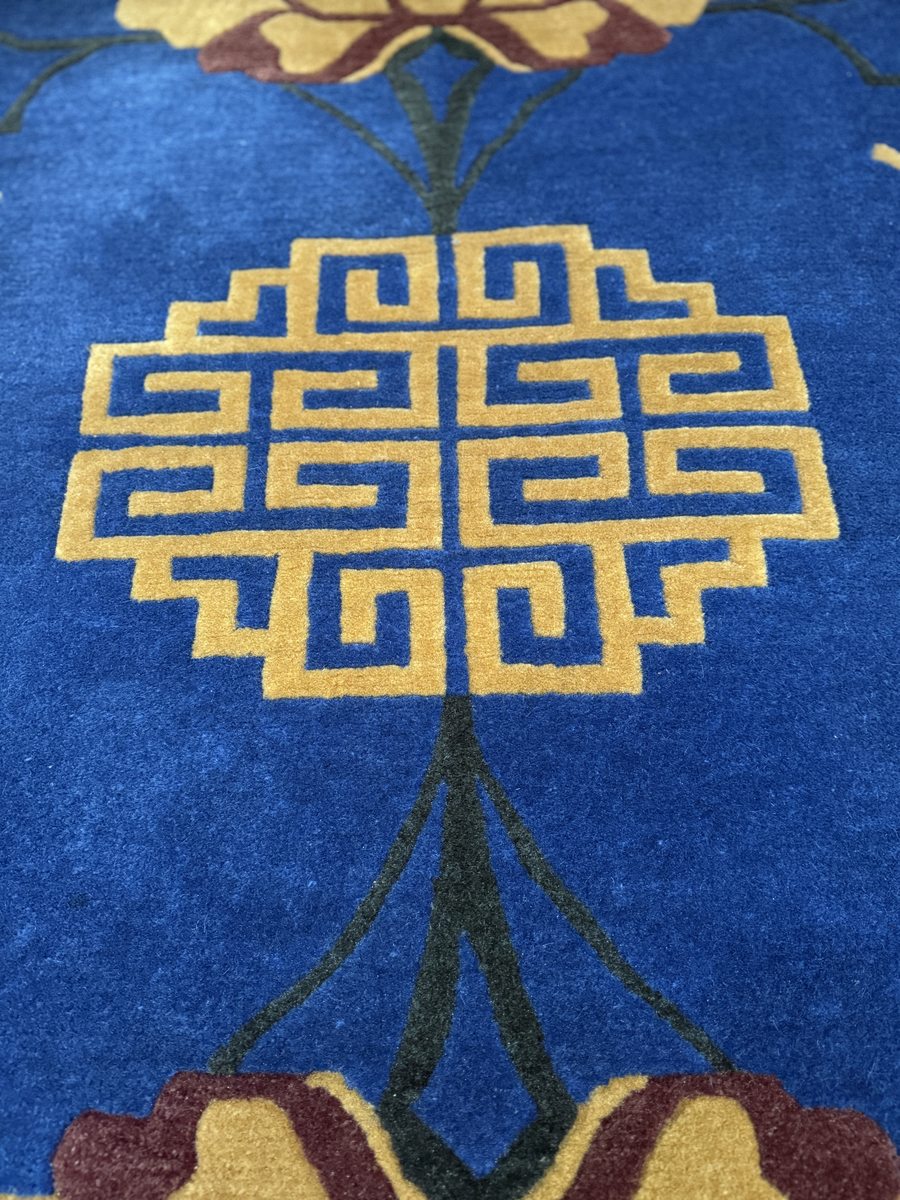
Today, Nepal's rug industry represents a rare convergence: ancient hand-knotting techniques executed with highland wool of extraordinary quality, guided by both traditional Buddhist aesthetics and cutting-edge contemporary design. Kathmandu Valley workshops weave in both 60-knot and 100-knot densities, each with its own distinct character.
The Gauge-Rod Technique
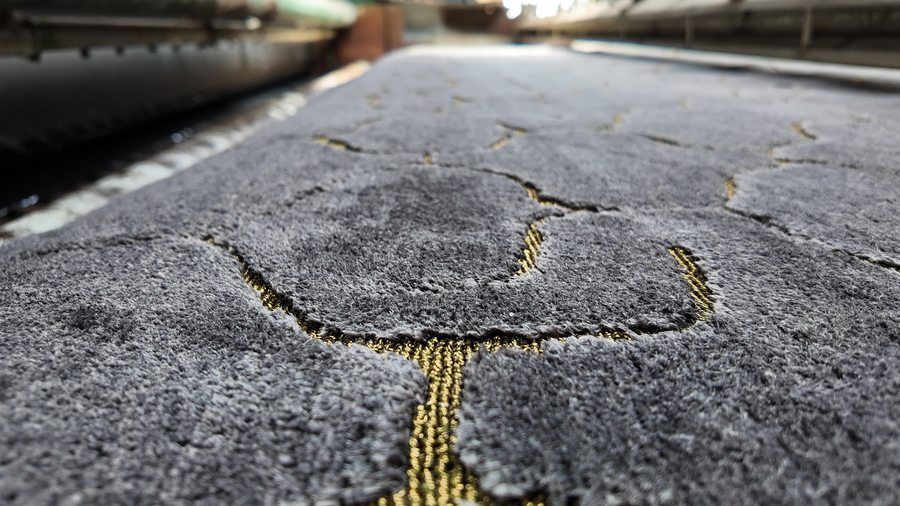
Unlike Persian or Turkish knots tied individually around warp threads, the Tibetan knot wraps yarn around a horizontal gauge rod. When the rod is withdrawn, it leaves a row of even loops that are then cut to create pile. This method produces a distinctly plush, springy texture impossible to replicate with other knotting systems.
Changpa Highland Wool
The finest Nepali rugs use wool from Changpa sheep and goats raised at elevations above 14,000 feet in the Tibetan Plateau and Himalayan highlands. The extreme cold produces a fiber with exceptional loft, natural lanolin, and a luminous sheen that deepens with age — one of the most desirable wools in the handmade rug world.
60-Knot vs. 100-Knot
Nepali rugs are typically produced in two density formats. The standard 60-knot (per square inch) produces a thicker, more textured pile ideal for contemporary designs. The finer 100-knot format allows for greater detail and precision, approaching Persian levels of intricacy while retaining the distinctive Tibetan pile character.